ECG Interpretation: Axis, Ischemia, Hypertrophy & Rhythm
Objective 1.1.2 — Interpret the 12-lead ECG and rhythm strip: determine mean QRS axis, recognize ischemia/injury/infarction by wall, identify chamber enlargement, recognize electrolyte effects, and walk through the 5-step rhythm strip method.
This lesson builds on Lesson 1's anatomy and waveform basics. Here we move from "what does the tracing show" to what does it mean clinically — direction of depolarization (axis), tissue oxygen state (ischemia/injury/infarction), chamber size, electrolyte effects, and a systematic method for interpreting any rhythm strip.
Mean QRS Axis
The mean QRS axis is the average direction of the depolarization wave that spreads through the ventricles to stimulate the muscle to contract.
Many waves of depolarization occur simultaneously, spreading out from the SA node. The summation of all these waves gives the mean QRS axis.
Hexaxial Reference System
Formulated using the 6 limb leads of Einthoven's triangle. The leads are superimposed so they cross at the center of a circle, with 30° between each lead. Each lead is assigned a number in degrees with positive and negative values.
The hexaxial reference system is used primarily to determine mean QRS axis.
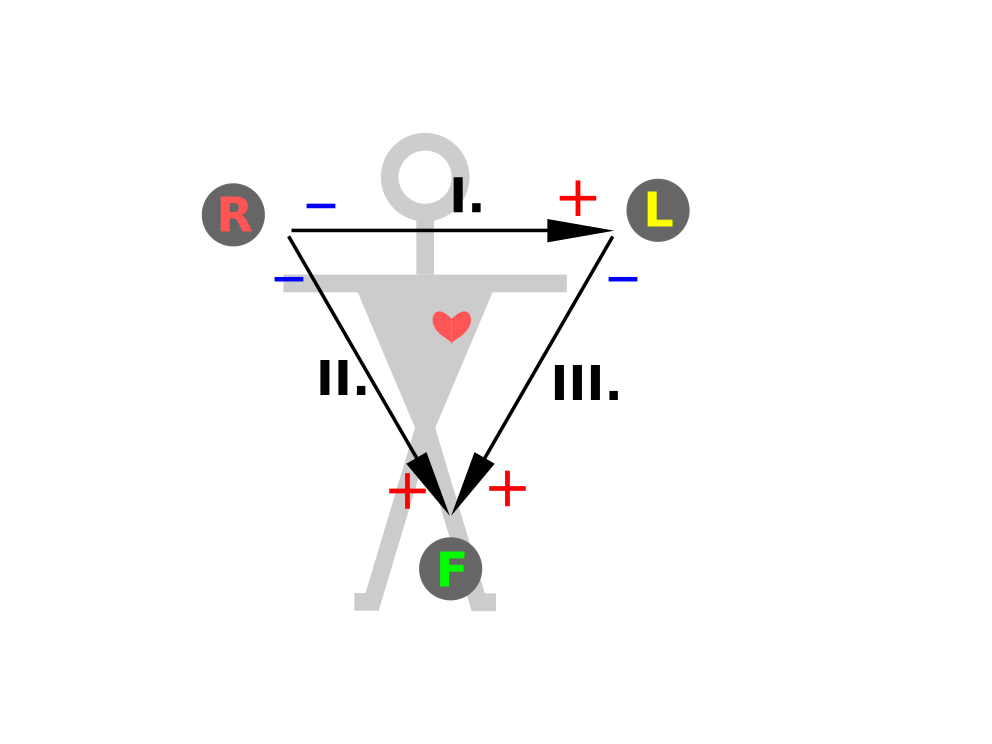
| Lead | Angle |
|---|---|
| I | 0° |
| II | +60° |
| aVF | +90° |
| III | +120° |
| aVR | −150° (or +210°) |
| aVL | −30° |
Axis Deviation — Quadrant Ranges
| Axis | Range |
|---|---|
| Normal | 0° to +90° |
| Left Axis Deviation (LAD) | −1° to −90° |
| Right Axis Deviation (RAD) | +90° to ±180° |
| Extreme Right Axis Deviation | −91° to −179° |
Quick Look Method
Use the net deflection of leads I and aVF to place the axis in one of the four quadrants.
| Lead I | Lead aVF | Quadrant / Axis |
|---|---|---|
| Positive | Positive | Normal (0° to +90°) |
| Positive | Negative | Left Axis Deviation |
| Negative | Positive | Right Axis Deviation |
| Negative | Negative | Extreme Right Axis Deviation |
Memory aid — both leads up = "thumbs up" = normal. Leads point apart ("reaching for each other" or "reaching away") = deviation.
Factors Affecting Mean QRS Axis
Right Axis Deviation
- Emphysema
- Right Ventricular Hypertrophy (RVH)
- COPD
- Pulmonary embolism
- Left ventricular MI
- Dextrocardia
Left Axis Deviation
- High diaphragm
- Pregnancy
- Abdominal tumors
- Hyperkalemia
- Left Ventricular Hypertrophy (LVH)
- Right ventricular MI
Many of these are mass/load changes (the bigger or more strained ventricle pulls the mean vector toward itself) or mechanical changes (a high diaphragm pushes the heart into a more horizontal position, shifting the axis leftward).
Infarctions and Ischemia
Coronary Artery Distribution
The leads on a 12-lead ECG view tissue supplied by specific coronary arteries:
| Leads | Coronary supply |
|---|---|
| II, III, aVF | Right Coronary Artery (RCA) |
| I, aVL, V1 – V6 | Left Coronary Artery (LCA) |
Myocardial Injury — ST Segment Elevation
ST elevation indicates acute myocardial injury.
ST elevation criteria: ≥ 1 mm above the isoelectric line at a point 0.04 seconds to the right of the J point, seen in 3 or more consecutive leads.
Myocardial Infarction
STEMI — ST Elevation Myocardial Infarction
STEMI evolves through four classic phases on the ECG:
| Phase | Findings |
|---|---|
| Hyperacute | T wave measuring more than 50% of the preceding R wave |
| Early acute | ST elevation in conjunction with a tall T wave (upsloping) |
| Later acute | ST elevation in conjunction with T wave inversion |
| Fully evolved | Down-sloping ST elevation with T wave inversion and deep abnormal Q waves — the first sign that tissue death has occurred |
NSTEMI — Non-ST Elevation Myocardial Infarction
No ST elevation is present on the ECG. NSTEMI diagnosis is made based on the patient's:
- Signs and symptoms
- History
- Cardiac biomarker test results (serum enzymes — troponin, CK-MB)
Myocardial Ischemia
Ischemia is reversible reduction in blood flow without tissue death.
| Finding | Threshold / pattern |
|---|---|
| ST segment depression | > 0.5 mm in V2 & V3; > 1 mm in all other leads |
| T wave inversion | Present |
Wall Infarctions / Ischemia
The 12-lead ECG localizes infarction or ischemia by which leads show the changes.
Septal Wall
- Leads V1 and V2 face the septal area of the left ventricle.
- The septum, which contains the bundle of His and bundle branches, is normally supplied by the LAD artery.
Anterior Wall
- Leads V3 and V4 face the anterior wall of the left ventricle.
- The LAD artery supplies approximately 40% of the heart's blood and a critical section of the left ventricle.
- A blockage here can lead to heart failure, ventricular dysfunction, and cardiogenic shock.
- If the entire anterior wall is involved, ECG changes will be visible in V1, V2, V3, and V4.
Lateral Wall
- Leads I, aVL, V5 and V6 view the lateral wall of the left ventricle.
- The lateral wall may be supplied by the left circumflex artery, the LAD, or a branch of the right coronary artery.
Inferior Wall
- Leads II, III, and aVF view the inferior surface of the left ventricle.
- Supplied by the posterior descending branch of the RCA.
- Increased parasympathetic nervous system activity is common with inferior wall MI (expect bradycardia, hypotension, nausea).
Posterior Wall
- A standard 12-lead ECG does not directly view the posterior surfaces of the heart.
- Additional chest leads (V7, V8, V9) placed further left and toward the back are used.
- The posterior wall is supplied by the circumflex coronary artery in most patients; in some patients, by the right coronary artery.
Right Ventricular Infarction (RVI)
- The right ventricle is supplied by the right ventricular marginal branch of the right coronary artery.
- Occlusion of the RV marginal branch alone → isolated right ventricular infarction.
- Occlusion of the RCA proximal to the RV marginal branch → inferior + right ventricular infarction.
Clinical triad of RVI — hypotension, jugular venous distention (JVD), and clear breath sounds. Suspect RVI in any inferior MI with these findings.
Wall-to-Lead Quick Reference
| Wall | Leads | Usual artery |
|---|---|---|
| Septal | V1, V2 | LAD |
| Anterior | V3, V4 | LAD |
| Lateral | I, aVL, V5, V6 | Circumflex (or LAD / RCA branch) |
| Inferior | II, III, aVF | RCA (posterior descending) |
| Posterior | V7, V8, V9 | Circumflex (or RCA) |
| Right Ventricular | (RV leads, e.g., V4R) | RCA — RV marginal branch |
Chamber Enlargement
Right Atrial Enlargement (RAE)
- Produces an abnormally tall initial part of the P wave.
- P wave may be biphasic in lead V1.
- Usually caused by conditions that increase the workload of the right atrium (pulmonary hypertension, tricuspid valve disease, COPD).
Left Atrial Enlargement (LAE)
- The latter part of the P wave is widened — it takes longer to depolarize the enlarged muscle.
- P wave > 0.11 seconds in duration.
- Often notched in leads I, II, aVL, V4, V5, and V6.
- Occurs because of conditions that increase left atrial pressure, volume overload, or both (mitral valve disease, hypertension, LV failure).
Left Ventricular Hypertrophy (LVH)
Findings include increased voltages and ST-T changes (with marked T wave inversion in the lateral precordial leads). LVH may be accompanied by left axis deviation.
Recognized by:
- Deeper-than-normal S waves and small R waves in V1 – V2
- Taller R waves and small S waves in V5 and V6
LVH voltage criterion — if the S wave amplitude in V1 added to the R wave amplitude in V5 is ≥ 35 mV, suspect LVH.
Right Ventricular Hypertrophy (RVH)
Right axis deviation is one of the earliest and most reliable findings of RVH.
Recognized by:
- Reversed normal R wave progression in the chest leads
- R waves are increased in V1 and become progressively smaller toward V6
Electrolyte Disturbances
Sodium (135 – 145 mEq/L)
- Hypernatremia — deficient water intake, excessive salt ingestion, severe watery diarrhea, water loss.
- Hyponatremia — prolonged diuretic therapy, excessive sodium loss from trauma, prolonged vomiting or diarrhea/laxative use.
Sodium disturbances do NOT cause significant changes on the ECG.
Calcium (4.5 – 5.5 mEq/L)
| Disturbance | Cause | ECG finding |
|---|---|---|
| Hypercalcemia | Excessive vitamin D or calcium intake | Prolonged PR interval |
| Hypocalcemia | Acute/chronic renal failure or vitamin D deficiency | Long, flat ST segments and prolonged QT interval |
Potassium (3.5 – 5.0 mEq/L)
| Disturbance | Cause | ECG finding |
|---|---|---|
| Hyperkalemia | Excessive potassium supplements or salt substitutes | Wide QRS complexes and prolonged PR intervals (and the peaked T waves from Lesson 1) |
| Hypokalemia | Inadequate dietary intake of potassium, prolonged vomiting, diarrhea/laxative use | Depressed ST segment |
Rhythm Strip Interpretation — 5 Steps
A systematic method works on every rhythm strip you'll ever read.
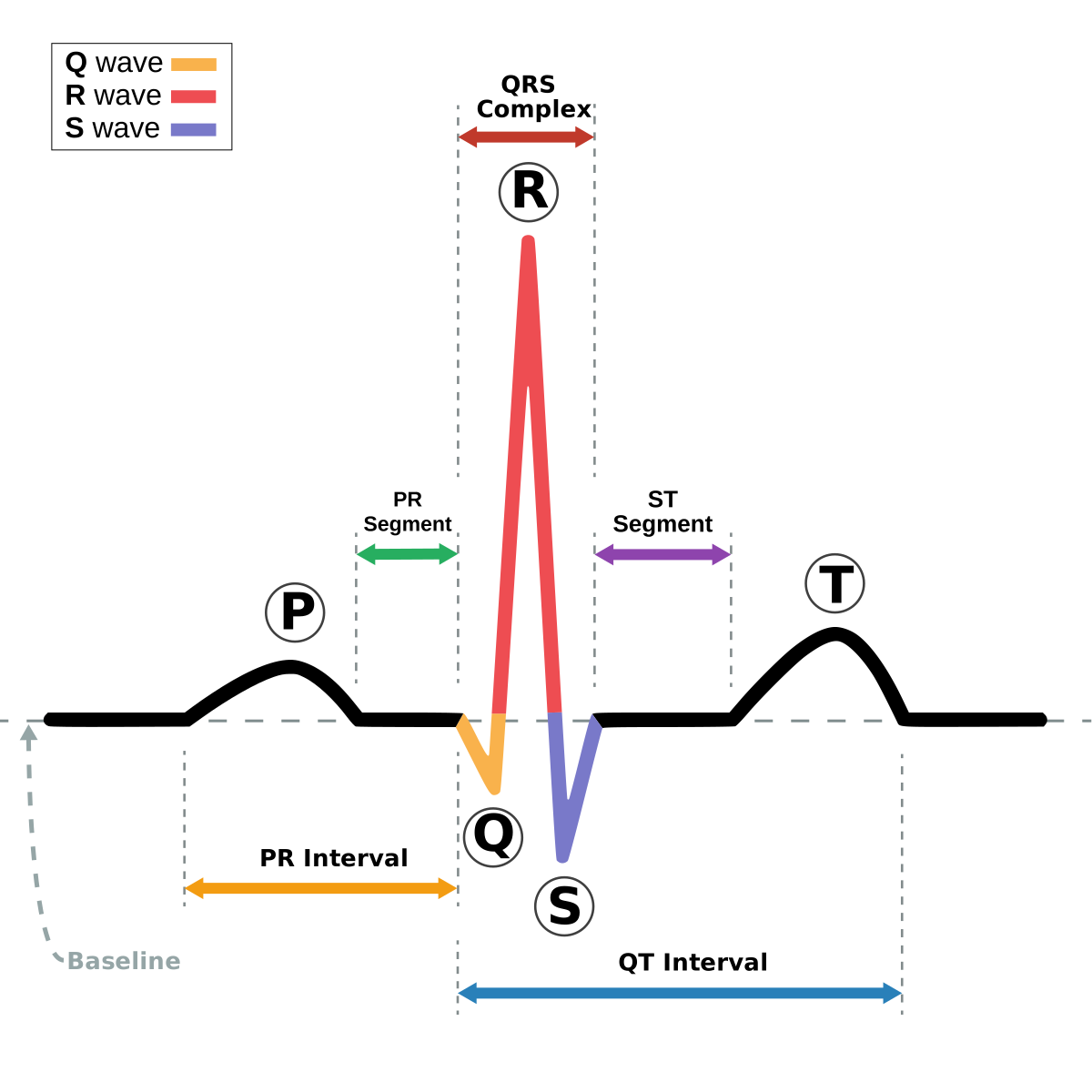
- Step 1 — Assess the rate
- Step 2 — Assess the rhythm/regularity
- Step 3 — Identify and examine P waves
- Step 4 — Assess the PR interval
- Step 5 — Assess the QRS complex
Step 1 — Assess the Rate
Intrinsic Pacemaker Rates
| Pacemaker | Intrinsic rate |
|---|---|
| SA node | 60 – 100 beats/min |
| AV node | 40 – 60 beats/min |
| Ventricular / Purkinje fibers | 20 – 40 beats/min |
Six-Second Method
The simplest, quickest, and most commonly used method — also the most inaccurate. Works for regular and irregular rhythms.
- Ventricular rate — count the QRS complexes within a 6-second window and multiply by 10.
- Atrial rate — count the P waves within a 6-second window and multiply by 10.
Large Box Method
Best when the rhythm is regular. 300 large boxes = 1 minute.
Rate = 300 ÷ (number of large boxes between R-R)
Small Box Method
Best when the rhythm is regular. 1500 small boxes = 1 minute.
- Ventricular rate — count small boxes between R-R, then 1500 ÷ that number.
- Atrial rate — count small boxes between P-P, then 1500 ÷ that number.
Triplicate Method
Best when the rhythm is regular.
- Select an R wave that falls on a dark vertical line.
- Number the next six consecutive dark vertical lines: 300, 150, 100, 75, 60, 50.
- Where the next R wave falls in relation to those lines is the rate.
| Dark line | Rate |
|---|---|
| 1st | 300 |
| 2nd | 150 |
| 3rd | 100 |
| 4th | 75 |
| 5th | 60 |
| 6th | 50 |
Step 2 — Assess the Rhythm / Regularity
- Measure the distance between the P-P interval for atrial rhythm.
- Measure the distance between the R-R interval for ventricular rhythm.
If the variation is more than 4 small boxes (0.16 seconds), the rhythm is irregular.
Step 3 — Identify and Examine P Waves
Normally P waves are:
- Left of each QRS complex
- Precede each QRS complex
- Look similar in size, shape, and position
Three questions to answer:
- Are P waves present?
- Is there a P wave before every QRS?
- Do they all look the same?
Step 4 — Assess the PR Interval
The PR interval is measured from the onset of the P wave to the onset of the QRS complex.
Normal PR interval: 0.12 – 0.20 seconds.
(Long PR > 0.20 s = AV delay/block. Short PR < 0.12 s = ectopic pacemaker close to the AV node — see Lesson 1.)
Step 5 — Assess QRS Duration
Measured from the first deflection of the complex from baseline until the last wave levels out at, above, or below the baseline.
| QRS | Duration |
|---|---|
| Narrow | ≤ 0.11 seconds |
| Wide | > 0.11 seconds |
A wide QRS suggests the impulse originated below the AV node (ventricular ectopy) or that conduction through the ventricles is delayed (bundle branch block).
High-Yield Recap
| Topic | Memorize cold |
|---|---|
| Axis quadrants | Normal 0° → +90° · LAD −1° → −90° · RAD +90° → ±180° · Extreme RAD −91° → −179° |
| Quick look | I↑ aVF↑ = normal · I↑ aVF↓ = LAD · I↓ aVF↑ = RAD · I↓ aVF↓ = extreme RAD |
| STEMI evolution | Hyperacute T → ST↑ + tall T → ST↑ + T inversion → down-sloping ST↑ + T inversion + deep Q (tissue death) |
| NSTEMI | No ST elevation; diagnose by S/Sx + history + cardiac biomarkers |
| ST depression | > 0.5 mm in V2/V3, > 1 mm elsewhere |
| Walls (lead set) | Septal V1/V2 · Anterior V3/V4 · Lateral I, aVL, V5, V6 · Inferior II, III, aVF · Posterior V7–V9 |
| RVI triad | Hypotension · JVD · clear breath sounds |
| LVH criterion | S(V1) + R(V5) ≥ 35 mV; often paired with LAD |
| RVH | Right axis deviation + reversed R-wave progression (large in V1, smaller toward V6) |
| Electrolytes | Na — no change · ↑Ca → long PR · ↓Ca → long flat ST + long QT · ↑K → wide QRS + long PR · ↓K → ST depression |
| Rate (regular) | 300 ÷ large boxes · 1500 ÷ small boxes · triplicate (300-150-100-75-60-50) |
| Rate (any rhythm) | Six-second method × 10 |
| Irregular | R-R variation > 4 small boxes (0.16 s) |