12-Lead ECG & Rhythm Strip
Objective 1.1.1 — Perform a 12-lead electrocardiogram and rhythm strip.
The electrocardiogram (ECG) records the electrical activity of large masses of atrial and ventricular cells as specific waveforms and complexes. A 12-lead ECG views the heart from 12 different angles in both the frontal and horizontal planes — most of those angles look at the surfaces of the left ventricle.
ECGs are used to monitor a patient's:
- Heart rate
- Effects of disease or injury on heart function
- Pacemaker function
- Response to medications (e.g., antiarrhythmics)
- Baseline before, during, and after medical procedures
The heart's electrical activity is observed via electrodes on the skin, connected by cables to the ECG machine.
Electrodes & Placement
A 12-lead ECG uses 10 electrodes:
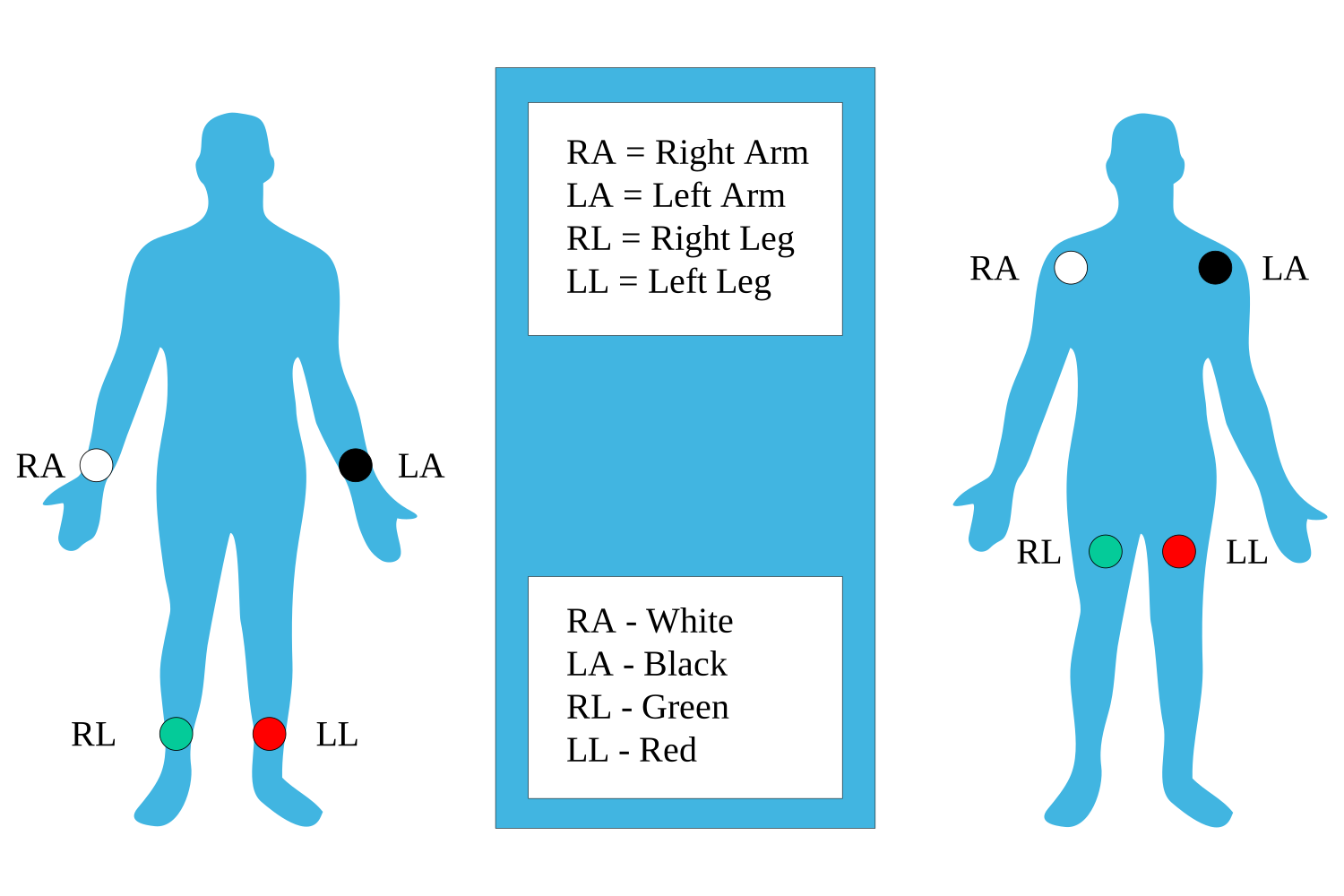
- 4 limb electrodes (right arm, left arm, left leg, right leg)
- 6 chest electrodes (V1–V6)
Limb Electrode Placement (Frontal Leads)
| Electrode | Location |
|---|---|
| RA | Right arm |
| LA | Left arm |
| LL | Left leg |
| RL | Right leg — used as the ground |
- Limb electrodes are usually placed on the wrists and ankles but may be positioned anywhere on the appropriate limb.
- To reduce muscle tension, make sure the patient's limbs are resting on a supportive surface.
- Do not apply electrodes over bony areas, broken skin, joints, scar tissue, burns, or rashes.
Chest Electrode Placement (Horizontal Plane Leads)
| Lead | Anatomic Landmark |
|---|---|
| V1 | 4th intercostal space, right of the sternum |
| V2 | 4th intercostal space, left of the sternum |
| V3 | Halfway between V2 and V4 |
| V4 | 5th intercostal space, midclavicular line |
| V5 | 5th intercostal space, anterior axillary line |
| V6 | 5th intercostal space, mid-axillary line |

Performing an ECG
Prepare the equipment
- Ensure the machine has adequate ECG paper
- Gather supplies: gloves, gauze, electrodes, skin cleanser
- Connect the ECG cable to the machine
- Inspect for frayed/broken cables or lead wires
Prepare the patient
- Bring the patient into the room, introduce yourself, and explain the procedure
- Have the patient remove garments from the waist up
- Prep the skin to minimize tracing distortion:
- Briskly rub with a dry gauze pad and skin cleanser (usually soapy water)
- Shave small amounts of chest hair if needed for good electrode contact
- Remove the backing from each electrode and apply in the appropriate location
- Connect lead wires to the electrodes
Acquire the tracing
- Coach the patient to relax
- Adjust the ECG size if necessary
- Press print, rhythm, or record to capture the tracing
- Verify the tracing is free of artifact before removing cables and electrodes
Artifact
Artifact is distortion of the ECG tracing by electrical activity that is non-cardiac in origin.
Artifact can mimic cardiac dysrhythmias — including ventricular fibrillation. Always evaluate the patient first before initiating any medical intervention.
Common causes:
- Patient movement / muscle tremor (shivering, Parkinson's, talking)
- Loose or dried-out electrodes
- Broken or frayed lead wires
- 60-cycle electrical interference from nearby equipment
- Improper skin prep (oil, lotion, sweat)
ECG Paper Measurements
ECG paper is a grid where the horizontal axis is time and the vertical axis is amplitude (voltage).
| Axis | Small block (1 mm) | Large block (5 mm) |
|---|---|---|
| Horizontal — time | 0.04 sec | 0.20 sec |
| Vertical — amplitude | 0.1 mV | 0.5 mV |

Waveform Deflection from Baseline
The shape of each waveform depends on the direction of the depolarization wave relative to the recording electrode:
| Wave direction relative to (+) electrode | Resulting waveform |
|---|---|
| Toward the positive electrode | Upright (positive deflection) |
| Away from the positive electrode | Inverted (negative deflection) |
| Perpendicular to the positive electrode | Biphasic (partly positive, partly negative) |
Waveform Interpretation
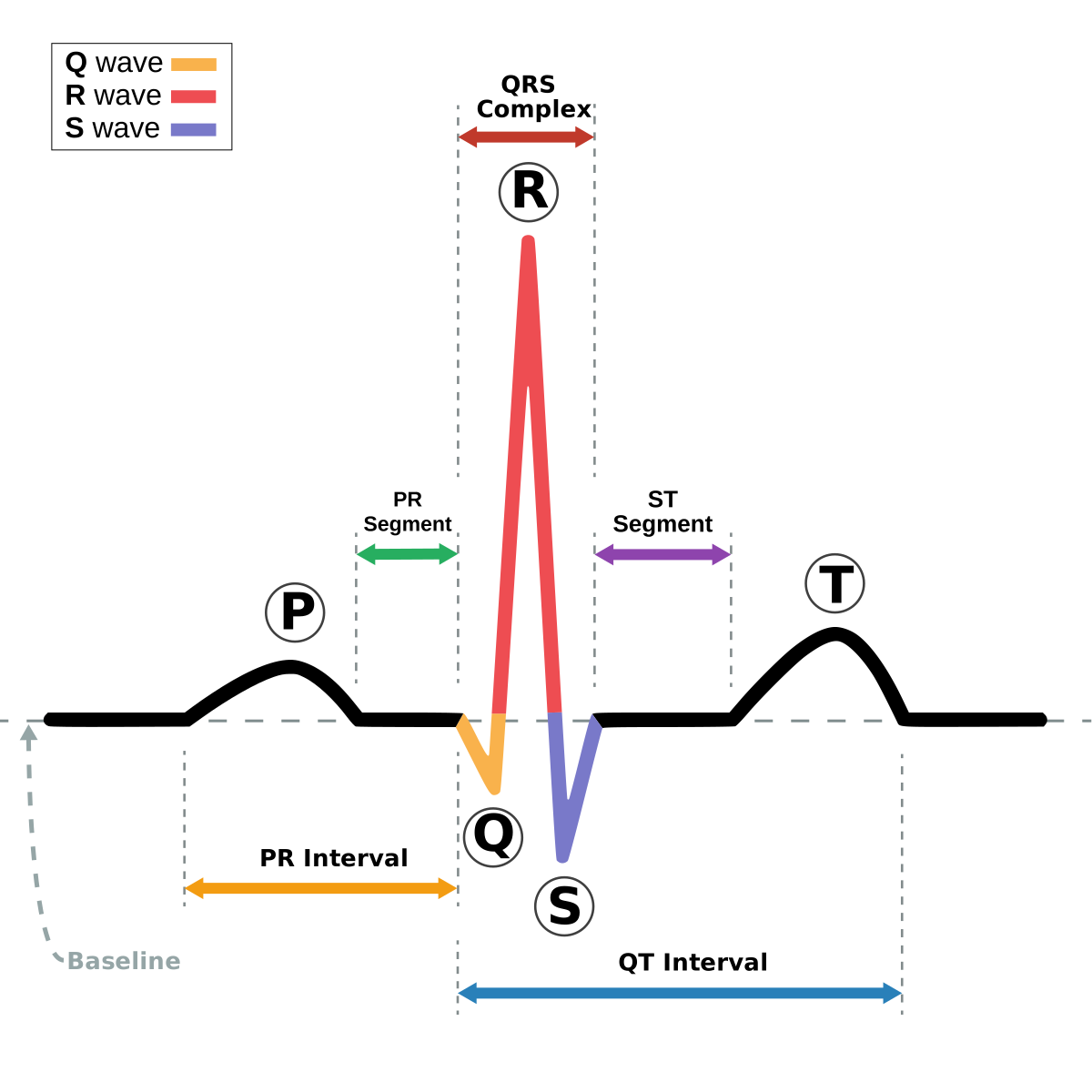
P Wave
Represents atrial depolarization.
- The first half is recorded as the impulse leaves the SA node and stimulates the right atrium, then reaches the AV node
- Smooth and rounded
- No greater than 2.5 mm / 0.25 mV tall
- No greater than 0.11 seconds wide
- Positive in leads I, II, aVF, and V2–V6
QRS Complex
Represents ventricular depolarization. Because of the left ventricle's greater muscle mass, the QRS predominantly reflects left ventricular activity.
- Q wave — depolarization of the interventricular septum (activates left to right). Begins as a downward deflection.
- R wave — large, upright, triangular waveform; always positive
- S wave — the negative waveform following the R wave
- The R and S waves represent simultaneous depolarization of the right and left ventricles
Normal QRS duration: ≤ 0.11 seconds
T Wave
Represents ventricular repolarization.
At the peak of the T wave, the Relative Refractory Period (RRP) has begun — a stronger-than-normal stimulus during the RRP can produce a ventricular dysrhythmia.
Abnormal T Wave
| T wave appearance | Suggests |
|---|---|
| Inverted / negative | Myocardial ischemia |
| Tall, peaked | Hyperkalemia |
| Low amplitude | Hypokalemia or hypomagnesemia |
U Wave
Represents repolarization of the Purkinje fibers.
- Small upright waveform that, when seen, follows the T wave
- Usually less than 0.1 mV
- Negative U waves in V2–V5 may be seen in ischemic heart disease or hypertension
Segments & Intervals

PR Segment
The line between the end of the P wave and onset of the QRS complex. Represents activation of the AV node, bundle of His, bundle branches, and Purkinje fibers.
PR Interval (PRI)
Begins with the onset of the P wave and ends with the onset of the QRS complex.
| PR Interval | Normal range |
|---|---|
| Normal | 0.12 – 0.20 seconds |
| Long (> 0.20 s) | Impulse delayed/blocked before reaching the AV node |
| Short (< 0.12 s) | Impulse originates in an ectopic pacemaker close to the AV node |
ST Segment
Represents the early part of ventricular repolarization — the segment between the QRS complex and the T wave.
| ST appearance | Suggests |
|---|---|
| Depression | Myocardial ischemia |
| Elevation — "frowny face" | Acute injury (e.g., myocardial infarction, pericarditis) |
| Elevation — "smiley face" | Usually benign |
ST segment elevation varies and depends on the patient's age, sex, and ECG lead.
J Point
The point where the QRS complex and the ST segment meet.
QT Interval
Represents total ventricular activity — from depolarization (activation) through repolarization (recovery). Varies with age, sex, and heart rate.
Generally, the QT interval should be less than 50% of the R-R interval.
Conditions associated with a prolonged QT:
- Certain drugs (e.g., antiarrhythmics, some antibiotics, antipsychotics)
- Hypocalcemia
- Marked bradyarrhythmias
- Intracranial hemorrhage
- Myocarditis
Leads
A lead is a tracing of electrical activity between two electrodes. Each lead records the average current flow at a specific time in a portion of the heart.
Standard & Augmented Limb Leads (Frontal Plane)
Formed by leads I, II, III, aVL, aVF, and aVR — they view the frontal plane of the heart and rely on Einthoven's triangle (RA, LA, LL, with RL as ground).
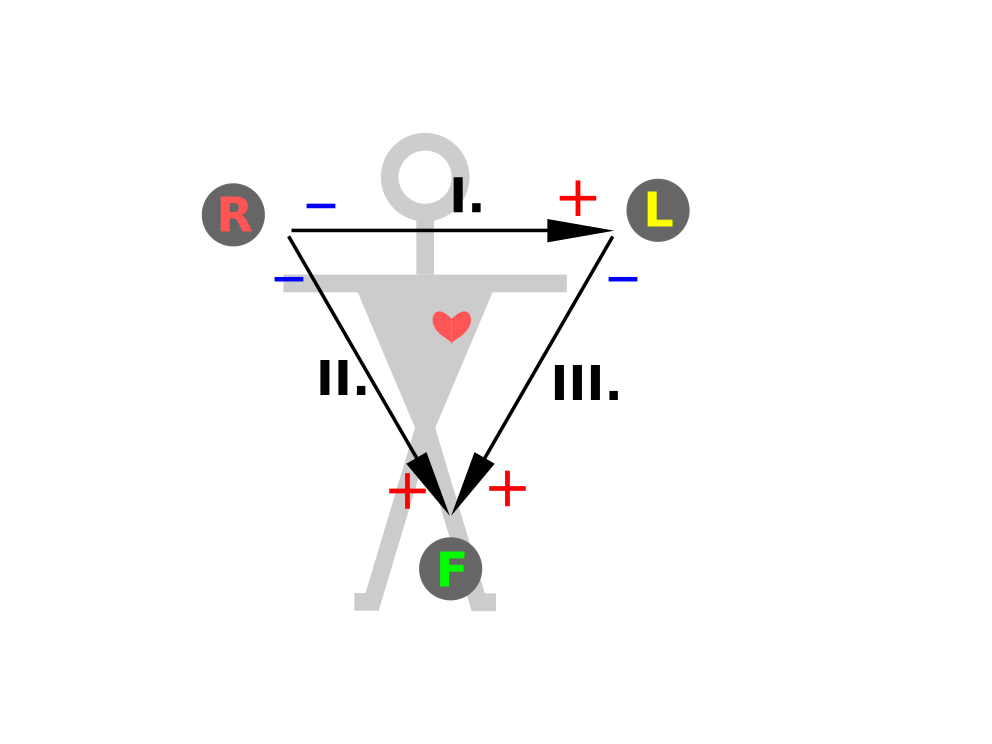
Standard limb leads (bipolar)
| Lead | Electrodes (+ / −) | View | Complex |
|---|---|---|---|
| I | LA (+) / RA (−) | Lateral wall of left ventricle | Upright |
| II | LL (+) / RA (−) | Inferior wall of left ventricle | Upright |
| III | LL (+) / LA (−) | Inferior wall of left ventricle | Upright |
Lead II is the most commonly used lead for cardiac monitoring — its electrode orientation most closely resembles the normal pathway of current flow in the heart.
Augmented limb leads (unipolar)
A single positive electrode forms each lead.
| Lead | Positive | View | Complex |
|---|---|---|---|
| aVR | RA | Right shoulder; base of heart (atria, great vessels) | Inverted |
| aVL | LA | Left shoulder; lateral wall of left ventricle | Upright or biphasic |
| aVF | LL | Left foot; inferior wall of left ventricle | Upright |
Horizontal Plane Leads (V1–V6)
Unipolar chest leads that view the heart as if the body were sliced in half horizontally — directions are anterior, posterior, right, and left.
| Lead | View |
|---|---|
| V1 | Septal wall |
| V2 | Septal wall |
| V3 | Anterior wall |
| V4 | Anterior wall |
| V5 | Lateral wall |
| V6 | Lateral wall |
Mnemonic — "SALI" (which leads see which wall)
| Wall | Leads |
|---|---|
| Septal | V1, V2 |
| Anterior | V3, V4 |
| Lateral | V5, V6, I, aVL |
| Inferior | II, III, aVF |